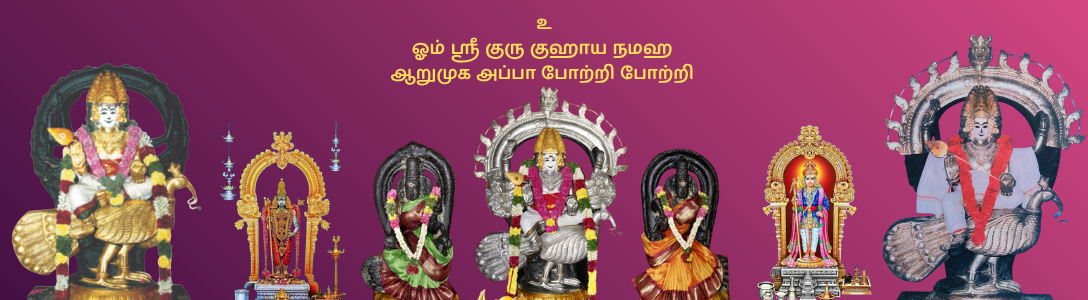
Thiruppugal 944 Pandhapporbara
மயூரகிரிநாதா உன் திருவடிகள் சரணம்
– மயூரகிரிநாதனுக்கு அரோகரா –
– குன்றக்குடி முருகனுக்கு அரோகரா –
பாடல்
தந்தத்தத் தானன தானன
தந்தத்தத் தானன தானன
தந்தத்தத் தானன தானன – தனதான
பந்தப்பொற் பாரப யோதர
முந்திச்சிற் றாடகை மேகலை
பண்புற்றுத் தாளொடு மேவிய – துகிலோடே
பண்டெச்சிற் சேரியில் வீதியில்
கண்டிச்சிச் சாரொடு மேவியெ
பங்குக்கைக் காசுகொள் வேசியர் – பனிநீர்தோய்
கொந்துச்சிப் பூவணி கோதையர்
சந்தச்செந் தாமரை வாயினர்
கும்பிட்டுப் பாணியர் வீணிய – ரநுராகங்
கொண்டுற்றுப் பாயலின் மூழ்கினு
மண்டிச்செச் சேயென வானவர்
கொஞ்சுற்றுத் தாழ்பத தாமரை – மறவேனே
அந்தத்தொக் காதியு மாதியும்
வந்திக்கத் தானவர் வாழ்வுறும்
அண்டத்துப் பாலுற மாமணி – யொளிவீசி
அங்கத்தைப் பாவைசெய் தாமென
சங்கத்துற் றார்தமி ழோதவு
வந்துக்கிட் டார்கழு வேறிட – வொருகோடிச்
சந்தச்செக் காளநி சாசரர்
வெந்துக்கத் தூளிப டாமெழ
சண்டைக்கெய்த் தாரம ராபதி – குடியேறத்
தங்கச்செக் கோலசை சேவக
கொங்கிற்றொக் காரவி நாசியில்
தண்டைச்சிக் காரயில் வேல்விடு – பெருமாளே.
பதம் பிரித்தது
தந்தத்தத் தானன தானன
தந்தத்தத் தானன தானன
தந்தத்தத் தானன தானன – தனதான
பந்தம் பொன் பார பயோதரம்
உந்திச் சிற்று ஆடு அகை மேகலை
பண்பு உற்றுத் தாளொடு மேவிய – துகிலோடே
பண்டு எச்சில் சேரியில் வீதியில்
கண்டு இச்சிச்சாரொடு மேவியெ
பங்குக்கைக் காசு கொள் வேசியர் – பனி நீர் தோய்
கொந்துச்சிப்பூ அணி கோதையர்
சந்தச் செந்தாமரை வாயினர்
கும்பிட்டுப் பாணியர் வீணியர் – அநுராகம்
கொண்டு உற்றுப் பாயலில் மூழ்கினும்
மண்டிச் செச்சே என வானவர்
கொஞ்சு உற்றுத் தாழ் பத தாமரை – மறவேனே
அந்தத் தொக்காதியும் ஆதியும்
வந்திக்கத் தான் அவர் வாழ்வு உறும்
அண்டத்துப் பால் உற மா மணி – ஒளி வீசி
அங்கத்தைப் பாவை செய்தாம் என
சங்கத்து உற்றார் தமிழ் ஓத
உவந்துக் கிட்டார் கழு ஏறிட – ஒரு கோடிச்
சந்தச் செக் காள நிசாசரர்
வெந்து உக்கத் தூளி படாம் எழ
சண்டைக்கு எய்த்தார் அமராபதி – குடியேற
தங்கச் செங்கோல் அசை சேவக
கொங்கில் தொக்கு ஆர் அவிநாசியில்
தண்டைச் சிங்கார அயில் வேல் விடு – பெருமாளே.
English
panthappoR pArapa yOthara
munthicchit RAdakai mEkalai
paNputRuth thALodu mEviya – thukilOdE
paNdecchiR chEriyil veethiyil
kaNdicchic chArodu mEviye
pangukkaik kAsukoL vEsiyar – panineerthOy
konthucchip pUvaNi kOthaiyar
santhacchen thAmarai vAyinar
kumpittup pANiyar veeNiya – ranurAkang
koNdutRup pAyalin mUzhkinu
maNdicchec chEyena vAnavar
konjutRuth thAzhpatha thAmarai – maRavEnE
anthaththok kAthiyu mAthiyum
vanthikkath thAnavar vAzhvuRum
aNdaththup pAluRa mAmaNi – yoLiveesi
angaththaip pAvaisey thAmena
sangaththut RArthami zhOthavu
vanthukkit tArkazhu vERida – vorukOdi
santhacchek kALani sAsarar
venthukkath thULipa dAmezha
saNdaikkeyth thArama rApathi – kudiyERath
thangacchek kOlasai sEvaka
kongitRok kAravi nAsiyil
thaNdaicchik kArayil vElvidu – perumALE.
English Easy Version
pantham pon pAra payOtharam
unthic chitRu Adu akai mEkaxlai
paNpu utRuth thALodu mEviya – thukilOdE
paNdu ecchil sEriyil veethiyil
kaNdu icchicchArodu mEviye
pangukkaik kAsu koL vEsiyar – pani neer thOy
konthucchippU aNi kOthaiyar
santhac chenthAmarai vAyinar
kumpittup pANiyar veeNiyar – anurAkam
koNdu utRup pAyalil mUzhkinum
maNdic checchE ena vAnavar
konju utRuth thAzh patha thAmarai – maRavEnE
anthath thokkAthiyum Athiyum
vanthikkath thAn avar vAzhvu uRum
aNdaththup pAl uRa mA maNi – oLi veesi
angaththaip pAvai seythAm ena
sangaththu utRAr thamizh Otha
uvanthuk kittAr kazhu ERida – oru kOdic
chanthac chek kALa nisAsarar
venthu ukkath thULi padAm ezha
saNdaikku eyththAr amarApathi – kudiyERa
thangac chengOl asai sEvaka
kongil thokku Ar avinAsiyil
thaNdaic chingAra ayil vEl vidu – perumALE.
திருப்புகழ் 944 பந்தப்பொற் பார (அவிநாசி) – விளக்கம்
அருணகிரிநாதர் அருளிய திருப்புகழில் கொங்கு மண்டலத்தில் அமைந்துள்ள அவிநாசி (திருப்புக்கொளியூர்) திருத்தலத்தின் மீது பாடப்பட்ட அற்புதமான பாடல் “பந்தப்பொற் பார” (திருப்புகழ் 944). இப்பாடலில், உலகியல் ஆசைகளிலும் மாயைகளிலும் சிக்கினாலும், இறைவனின் திருவடிகளைச் சிறிதும் மறவாத உறுதியான பக்தி நிலையை அருணகிரிநாதர் வேண்டுகிறார். மேலும், முருகப்பெருமானின் வீரத்தையும் அருட்செயல்களையும் அழகாக விவரிக்கிறார்.
இப்பாடலின் விரிவான விளக்கம் கீழே 8 தலைப்புகளில் கொடுக்கப்பட்டுள்ளது:
1. முன்னுரை: அவிநாசித் திருப்புகழ் 944
இத்திருப்புகழ் மனித மனத்தின் சஞ்சலங்களையும், அதனைத் தாண்டிய இறை பக்தியையும் மையமாகக் கொண்டு பாடப்பட்டுள்ளது. மனிதர்கள் காமத்தாலும் சிற்றின்பத்தாலும் ஈர்க்கப்பட்டுத் தடம் மாறினாலும், உள்ளத்தின் ஆழத்தில் இறைவனின் திருவடித் தாமரைகளை மறக்காமல் பற்றிக்கொள்ள வேண்டும் என்ற உயர்ந்த தத்துவத்தை இப்பாடல் உணர்த்துகிறது. மேலும், அவிநாசித் திருத்தலத்தில் வீற்றிருக்கும் குமரனின் பெருமைகளை விரிவாகப் பேசுகிறது.
2. வேசியரின் மாயத் தோற்றமும் கவர்ச்சியும்
(பந்தப்பொற் பாரப யோதர முந்திச்சிற் றாடகை மேகலை…) பந்து போன்ற அழகிய மார்பகங்களையும், இடையணியான மேகலையையும் அணிந்துள்ள விலைமாதர்கள், பாதங்கள் வரை நீண்ட அழகிய ஆடை (துகில்) அணிந்து வலம் வருகின்றனர். தங்களின் வெளிப்புற அழகைக் காட்டி ஆடவர்களை மயக்கும் கவர்ச்சியான தோற்றத்துடன் அவர்கள் வீதிகளில் திரிகிறார்கள். இந்த உலகியல் மாயத் தோற்றமானது மனிதர்களை மிக எளிதில் ஈர்த்து, நல்வழியில் இருந்து தடம் மாற்றக்கூடியதாக உள்ளது என்பதை அருணகிரிநாதர் சுட்டிக்காட்டுகிறார்.
3. பொருள் தேடும் வேசியரின் போலி அன்பு
(பண்டெச்சிற் சேரியில் வீதியில் கண்டிச்சிச் சாரொடு மேவியெ…) வீதிகளில் பலருடன் கலந்துறவாடி, அவர்களிடம் இருந்து பணத்தைப் பறிப்பதையே முழுமையான குறிக்கோளாகக் கொண்டவர்கள் இந்த விலைமாதர்கள். நறுமணம் வீசும் பன்னீரில் தோய்த்த பூங்கொத்துகளைத் தலையில் அணிந்து, செந்தாமரை போன்ற சிவந்த உதடுகளைக் கொண்ட இவர்கள், கைகூப்பி வணங்குவது போல் நடித்துப் போலி அன்பைக் காட்டுகிறார்கள். இவர்களது வார்த்தைகளும் செயல்களும் வெறும் பொருளுக்காகவே தவிர, உண்மையான அன்பினால் விளைந்தவை அல்ல.
4. மாயைகளில் வீழ்ந்தாலும் மறவாத திருவடி
(கொண்டுற்றுப் பாயலின் மூழ்கினு மண்டிச்செச் சேயென வானவர்…) இத்தகைய போலியான காதல் வலையில் விழுந்து, விலைமாதர்களின் படுக்கையில் நான் மூழ்கிக் கிடக்க நேர்ந்தாலும், என் மனம் உன்னை மறக்கக் கூடாது. தேவர்கள் அனைவரும் திரண்டு வந்து “சேயோனே” (அழகிய குமரனே) என்று கொஞ்சிப் புகழ்ந்து வணங்கும் உனது தாமரை போன்ற மென்மையான திருவடிகளை எனது உள்ளம் ஒருபோதும் மறக்காமல் நிலைத்து நிற்க வேண்டும் என்று நெஞ்சுருகிப் பிரார்த்திக்கிறார் அருணகிரிநாதர்.
5. மும்மூர்த்திகளும் போற்றும் முருகனின் பெருமை
(அந்தத்தொக் காதியு மாதியும் வந்திக்கத் தானவர் வாழ்வுறும்…) முருகப்பெருமானின் தெய்வீகப் பெருமைகளைப் பேசும் அருணகிரிநாதர், உலகைப் படைக்கும் பிரம்மனும் (ஆதி), உலகைக் காக்கும் திருமாலும் (அந்தம்) வணங்கிப் போற்றும் முழுமுதற் கடவுள் முருகன் என்கிறார். தேவர்கள் அனைவரும் நல்வாழ்வு பெறுவதற்காக, அண்டம் முழுவதும் ஒளி வீசும் மாபெரும் மாணிக்க மணியைப் போலப் பிரகாசிக்கும் பேரொளி வடிவானவன் நம் குமரப்பெருமான் ஆவார்.
6. தமிழை வளர்த்துச் சமணரை வென்ற கருணை
(அங்கத்தைப் பாவைசெய் தாமென சங்கத்துற் றார்தமி ழோதவு…) முருகப்பெருமான் திருஞானசம்பந்தராக அவதரித்துச் செய்த மாபெரும் அற்புதங்களை இப்பகுதி குறிக்கிறது. மதுரைத் தமிழ்ச் சங்கத்தில் அமர்ந்து புலவர்கள் செந்தமிழை ஓதி வளர்க்கவும், சைவம் தழைக்கவும் அருளியவன் முருகன். அனல் வாதம், புனல் வாதங்களில் தோற்ற சமணர்கள் கழுவேறும்படி செய்து, பக்தி மார்க்கத்தையும் தமிழ் மொழியையும் தமிழ்நாட்டில் தழைத்தோங்கச் செய்த தமிழ்க் கடவுள் அவன்.
7. அசுரர்களை அழித்து தேவர்களைக் காத்த வீரம்
(சந்தச்செக் காளநி சாசரர் வெந்துக்கத் தூளிப டாமெழ…) இருளில் சஞ்சரிக்கும் கொடிய குணம் கொண்ட கோடிக்கணக்கான அசுரர்கள் (நிசாசரர்கள்) போர்க்களத்தில் எரிந்து தூசியாகும்படி (சாம்பலாகும்படி) அவர்களை அழித்தொழித்த மாபெரும் வீரன் முருகப்பெருமான். அசுரர்களுடனான நீண்ட சண்டையினால் மிகவும் தளர்ந்து போயிருந்த தேவர்கள், மீண்டும் தங்கள் தலைநகரமான அமராவதியில் நிம்மதியாகக் குடியேறி வாழும்படி செய்த கருணைக் கடல் அவன்.
8. கொங்கு நாட்டு அவிநாசிப் பெருமானின் அருளாட்சி
(தங்கச்செக் கோலசை சேவக கொங்கிற்றொக் காரவி நாசியில்…) தங்கத்தாலான அழகிய வேலைக் கையில் ஏந்திய மாபெரும் சேவகனே! கால்களில் வீரத்தண்டையை அணிந்தவனே! சிறந்த கொங்கு மண்டலத்தில் விளங்கும் பெருமை மிக்க அவிநாசித் திருத்தலத்தில் வீற்றிருந்து அடியார்களுக்கு அருளாட்சி செய்யும் பெருமாளே! கூர்மையான வேலைச் செலுத்தி அசுரர்களை அழித்தவனே, என்னையும் இந்த உலக மாயைகளில் இருந்து காத்தருள்வாயாக எனப் போற்றிப் பணிகிறார்.
சுருக்கம்
இத்திருப்புகழில் அருணகிரிநாதர், விலைமாதர்களின் போலி அன்பிலும் உலகியல் மாயைகளிலும் தான் சிக்கித் தவித்தாலும், தேவர்கள் போற்றும் முருகப்பெருமானின் திருவடிகளைத் தனது மனம் ஒருபோதும் மறக்கக்கூடாது என்று உறுதியான பக்தியை வேண்டுகிறார். திருமால் மற்றும் பிரம்மனால் போற்றப்படுபவனும், திருஞானசம்பந்தராக அவதரித்துத் தமிழை வளர்த்தவனும், கொடிய அசுரர்களை அழித்துத் தேவர்களை அமராவதியில் குடியேறச் செய்தவனுமான முருகனின் வீரத்தைப் புகழ்கிறார். இத்தகைய பெருமைகள் வாய்ந்த முருகன், கொங்கு நாட்டின் அவிநாசித் தலத்தில் வீற்றிருந்து அருள்பாலிப்பதாகப் பாடி மகிழ்கிறார்.
The Essence of Thiruppugazh 944 Panthappoṛ Paara (Avinashi)œ
Here is a deep, structured explanation of Arunagirinathar’s Thiruppugazh 944, sung in praise of Lord Murugan at the sacred shrine of Avinasi. In this hymn, the saint contrasts the dangerous allure of worldly lust with the supreme, saving grace of the Lord, vividly describing Murugan’s cosmic glory and his historical and mythological triumphs.
1. Introduction to the Hymn of Avinasi
This Thiruppugazh, situated in the ancient temple town of Avinasi in the Kongu region, is a profound reflection on human frailty and divine majesty. Arunagirinathar uses the first half of the song to describe the irresistible but deceptive trap of lust and sensual pleasures. In the second half, he shifts his focus to the magnificent feats of Lord Murugan. The core message is a desperate vow: even if the soul is temporarily blinded by worldly illusions, it must never forget the lotus feet of the Lord.
2. The Allure of Worldly Illusions
The hymn opens by vividly describing the physical allure of courtesans. Arunagirinathar describes women wearing beautifully crafted girdles (mekalai) around their waists and fine, flowing garments that touch their feet. By detailing their attractive physical features, the saint is not merely describing people, but symbolizing the powerful, intoxicating grip of Kama (lust). This represents the external, superficial beauty of the material world that easily distracts the human mind from its spiritual path.
3. The Deceptive Demeanor of Courtesans
Going deeper into the illusion, the saint describes the transactional nature of this worldly allure. He points out how these women roam the streets, engaging with various people purely to extract money. They adorn their hair with bunches of flowers soaked in fragrant rosewater and have lips as red as lotuses. They fold their hands in a feigned display of respect and speak sweet words, but their affection is entirely fake and motivated by greed. This serves as a metaphor for worldly desires that promise happiness but ultimately drain a person’s spiritual wealth.
4. A Vow to Never Forget the Divine Feet
After painting a stark picture of sensual traps, Arunagirinathar makes a powerful personal declaration. He vows that even if he were to fall prey to these illusions and sink deeply into the bed of infatuation, his inner consciousness will never forget Lord Murugan’s lotus feet. He recalls that these holy feet are constantly praised, sought after, and lovingly revered by the celestial beings (Devas), who affectionately call Murugan the beautiful, divine child. It is a plea for the Lord’s grace to protect his soul even when his mind falters.
5. The Supreme Lord Worshipped by the Trinity
The poem beautifully transitions from human weakness to divine supremacy. Arunagirinathar elevates Lord Murugan as the ultimate cosmic reality. He describes the Lord as being worshipped by both Brahma (the creator, representing the beginning or Aadhi) and Vishnu (the protector, representing the end or Antham). Murugan stands as a radiant, supreme being—shining brilliantly across the universe like a massive, flawless ruby, showering his grace so that the celestial beings may live in prosperity and peace.
6. The Champion of Tamil and Defender of Faith
The hymn embeds a historical and literary reference to Lord Murugan’s incarnation as the child-saint Thirugnana Sambandar. During a critical period in Madurai, false doctrines and extreme Jain sects had suppressed the path of devotion and the Tamil language. Arunagirinathar sings that it was Murugan’s grace that defeated these oppressive forces—leading to their dramatic downfall and impalement—thereby allowing the great scholars of the Sangam to once again chant and flourish in pure, divine Tamil.
7. The Destruction of Asuras and Restoration of Heavens
Shifting to mythology, the saint recounts Murugan’s primary purpose: the annihilation of evil. He describes how millions of dark-hearted, cruel Asuras (demons who wander in the night) were burned and reduced to mere dust on the battlefield by the Lord’s wrath. Before Murugan’s intervention, the Devas were utterly exhausted and displaced by the endless war. Through this magnificent victory, Murugan allowed the celestial beings to finally return to and resettle in Amaravathi, the capital city of heaven.
8. The Glorious Lord of Kongu’s Avinasi
In the concluding lines, Arunagirinathar grounds all these cosmic and heroic attributes in a specific location. He addresses Murugan as the great warrior wielding the gleaming, golden spear, whose feet are adorned with ringing anklets (thandai). This supreme, victorious deity, who commands both the heavens and the earth, graciously resides in the sacred town of Avinasi, nestled in the fertile Kongu region. The saint surrenders completely to this Lord of Avinasi, asking for His eternal protection.
Summary
Thiruppugazh 944 is a powerful composition that bridges the gap between human vulnerability and divine invincibility. Arunagirinathar openly acknowledges the dangerous, deceptive pull of sensual pleasures and transactional love, vowing that even in his weakest moments, he will hold tightly to Lord Murugan’s lotus feet. He then contrasts human frailty with the Lord’s immense glory—praising Murugan as the radiant supreme being worshipped by Brahma and Vishnu, the savior of the Tamil language through the Sambandar avatar, and the fierce warrior who burned millions of demons to dust to restore the heavenly capital of Amaravathi. Finally, he seeks refuge in this majestic, spear-wielding deity presiding over the Kongu shrine of Avinasi.