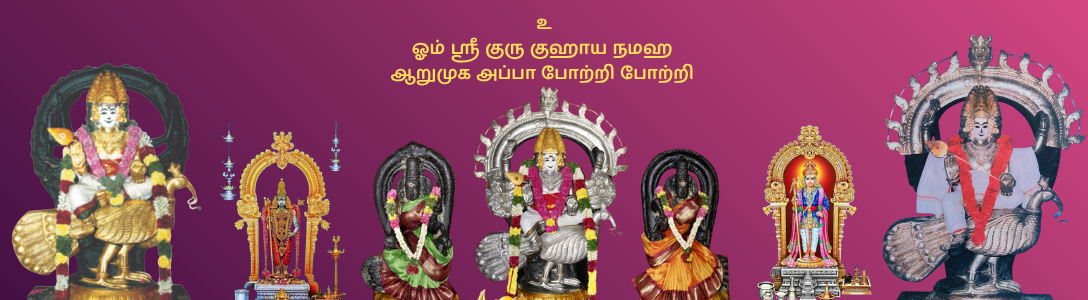
Thiruppugazh 219 sElumayilum (swAmimalai)
மயூரகிரிநாதா உன் திருவடிகள் சரணம்
– மயூரகிரிநாதனுக்கு அரோகரா –
– குன்றக்குடி முருகனுக்கு அரோகரா –
திருப்புகழ் 218 செகமாயை உற்று (சுவாமிமலை) – திருப்புகழ் 220 தருவர் இவர் (சுவாமிமலை)
பாடல்
தானதன தந்த தத்த தானதன தந்த தத்த
தானதன தந்த தத்த – தனதான
சேலுமயி லுந்த ரித்த வாளையட ருங்க டைக்கண்
மாதரைவ சம்ப டைத்த – வசமாகிச்
சீலமறை யும்ப ணத்தி லாசையிலை யென்ற வத்தை
காலமுமு டன்கி டக்கு – மவர்போலே
காலுமயி ரும்பி டித்து மேவுசிலு கும்பி ணக்கு
நாளுமிக நின்ற லைத்த – விதமாய
காமகல கம்பி ணித்த தோதகமெ னுந்து வக்கி
லேயடிமை யுங்க லக்க – முறலாமோ
ஏலமில வங்க வர்க்க நாகம்வகு ளம்ப டப்பை
பூகமரு தந்த ழைத்த – கரவீரம்
யாவுமலை கொண்டு கைத்த காவிரிபு றம்பு சுற்றும்
ஏரகம மர்ந்த பச்சை – மயில்வீரா
சோலைமடல் கொண்டு சக்ர மால்வரைய ரிந்த வஜ்ர
பாணியர்தொ ழுந்தி ருக்கை – வடிவேலா
சூர்முதிர்க்ர வுஞ்ச வெற்பும் வேலைநில மும்ப கைத்த
சூரனுட லுந்து ணித்த – பெருமாளே.
பதம் பிரித்தது
தானதன தந்த தத்த தானதன தந்த தத்த
தானதன தந்த தத்த – தனதான
சேலும் அயிலும் தரித்த வாளை அடரும் கடைக் கண்
மாதரை வசம் படைத்த – வசமாகி
சீலம் மறையும் பணத்தில் ஆசை இலை என்று அவத்தை
காலமும் உடன் கிடக்கும் – அவர் போலே
காலும் மயிரும் பிடித்து மேவும் சிலுகும் பிணக்கு
நாளும் மிக நின்று அலைத்த – விதம் ஆய
காம கலகம் பிணித்த தோதகம் எனும் துவக்கிலே
அடிமையும் கலக்கம் – உறலாமோ
ஏலம் இலவங்க வர்க்க நாகம் வகுளம் படப்பை
பூகம் மருதம் தழைத்த – கர வீரம்
யாவும் அலை கொண்டு கைத்த காவிரி புறம்பு சுற்றும்
ஏரகம் அமர்ந்த பச்சை – மயில் வீரா
சோலை மடல் கொண்டு சக்ர மால் வரை அரிந்த வஜ்ர
பாணியர் தொழும் திருக் கை – வடி வேலா
சூர் முதிர் க்ரவுஞ்ச வெற்பும் வேலை நிலமும் பகைத்த
சூரன் உடலும் துணித்த – பெருமாளே.
English
sElumayi luntha riththa vALaiyada rungka daikkaN
mAtharaiva sampa daiththa – vasamAki
seelamaRai yumpa Naththi lAsaiyilai yenRa vaththai
kAlamumu danki dakku – mavarpOlE
kAlumayi rumpi diththu mEvusilu kumpi Nakku
nALumika ninRa laiththa – vithamAya
kAmakala kampi Niththa thOthakame nunthu vakki
lEyadimai yungka lakka – muRalAmO
Elamila vanga varkka nAkamvaku Lampa dappai
pUkamaru thantha zhaiththa – karaveeram
yAvumalai koNdu kaiththa kAviripu Rampu sutRum
Erakama marntha pacchai – mayilveerA
sOlaimadal koNdu sakra mAlvaraiya rintha vajra
pANiyartho zhunthi rukkai – vadivElA
cUrmuthirkra vunja veRpum vElainila mumpa kaiththa
cUranuda lunthu Niththa – perumALE.
English Easy Version
sElum ayilum thariththa vALai adarum kadaik kaN
mAtharai vasam padaiththa – vasamAki
seelam maRaiyum paNaththil Asai ilai enRu avaththai
kAlamum udan kidakkum – avar pOlE
kAlum mayirum pidiththu mEvum silukum piNakku
nALum mika ninRu alaiththa – vitham Aya
kAma kalakam piNiththa thOthakam enum thuvakkilE
adimaiyum kalakkam – uRalAmO
Elam ilavanga varkka nAkam vakuLam padappai
pUkam marutham thazhaiththa – kara veeram
yAvum alai koNdu kaiththa kAviri puRampu sutRum
Erakam amarntha pacchai – mayil veerA
sOlai madal koNdu sakra mAl varai arintha vajra
pANiyar thozhum thiruk kai – vadi vElA
cUr muthir kravunja veRpum vElai nilamum pakaiththa
cUran udalum thuNiththa – perumALE.
திருப்புகழ் 219 சேலும் அயிலும் (சுவாமிமலை) – விளக்கம்
அருணகிரிநாத சுவாமிகள் சுவாமிமலையில் (திருவேரகம்) வீற்றிருக்கும் முருகப்பெருமானை வேண்டிப் பாடிய “சேலும் அயிலும்” (பாடல் 219) என்னும் இத்திருப்புகழ், காம மயக்கத்தால் வரும் சண்டை சச்சரவுகளில் சிக்கித் தவிக்கும் மனித மனத்தின் அவலத்தையும், அதிலிருந்து விடுபட முருகனின் வீரத்தையும் கருணையையும் வேண்டி நிற்கும் அற்புதமான பாடலாகும்.
இதன் விரிவான விளக்கத்தை எட்டுத் தலைப்புகளில் கீழே காணலாம்.
1. விலைமாதர்களின் விழிகளின் ஈர்ப்பு
பாடலின் தொடக்கத்தில் விலைமாதர்களின் கண்களுக்குச் சேல் மீன், கூர்மையான வேல் (அயில்), வாள் ஆகிய மூன்றையும் அருணகிரிநாதர் உவமையாகக் கூறுகிறார். மீனைப் போன்ற துள்ளலும், வேல் மற்றும் வாளைப் போன்ற கூர்மையும் கொண்ட கடைக்கண் பார்வையை வீசி ஆடவர்களைத் தம் வசப்படுத்தும் விலைமாதர்களின் மாய வலையில் மனித மனம் எளிதில் மயங்கி விடுகிறது என்பதை இது உணர்த்துகிறது.
2. நல்லொழுக்கம் மறையும் வீண் காலம்
இத்தகைய பெண்களின் வலையில் சிக்கியவர்கள் தங்களுடைய நல்லொழுக்கத்தை (சீலம்) முற்றிலுமாக இழந்து விடுகிறார்கள். தங்களுக்குப் பணத்தின் மீது எவ்வித ஆசையும் இல்லை என்று போலியாகக் கூறிக்கொண்டு, உள்ளூரப் பொருளாசையுடன் அந்தப் பெண்களின் பின்னால் அலைந்து திரிவார்கள். தங்களின் விலைமதிப்பற்ற காலத்தை வீணான அவஸ்தைகளிலும் துன்பங்களிலுமே அவர்கள் கழிப்பார்கள்.
3. காமத்தினால் வரும் சண்டைகளும் பிணக்குகளும்
காம மயக்கத்தில் இருப்பவர்களின் வாழ்வில் அமைதி இருக்காது. ஒருவருக்கொருவர் கால்களையும் தலைமுடியையும் பிடித்து இழுத்துச் சண்டையிடுவார்கள். எந்நேரமும் தேவையற்ற பிணக்குகளிலும் விவாதங்களிலும் ஈடுபட்டு, நிம்மதியை இழந்து அலைக்கழிக்கப்படுவார்கள். காமம் எவ்வாறு மனிதனின் இயல்பான அறிவை மழுங்கடித்து, அவனை மிருகத் தனமான சண்டைகளுக்கு இட்டுச் செல்கிறது என்பதைப் புலவர் படம் பிடித்துக் காட்டுகிறார்.
4. காம வலையிலிருந்து விடுபட வேண்டுதல்
காமத்தினால் ஏற்படும் கலகங்களும் சச்சரவுகளும் நிறைந்த, வஞ்சனை (தோதகம்) என்னும் வலையில் உனது அடிமையான நான் சிக்கிக் கலக்கமடையலாமா? அறிவற்றவர்கள் போல நான் இந்த இழிநிலையில் உழல்வது நியாயமா? என்னைக் காத்து இந்தத் துயரச் சுழற்சியிலிருந்து விடுவிப்பது உனது பொறுப்பல்லவா என்று முருகப்பெருமானிடம் உருகிப் பிரார்த்திக்கிறார்.
5. காவிரியின் செழிப்பும் இயற்கை வளமும்
தனது வேண்டுதலை முன்வைத்த பின்பு, சுவாமிமலைப் பகுதியின் இயற்கை எழிலை அருணகிரிநாதர் வர்ணிக்கிறார். ஏலக்காய், இலவங்கம், நாகலிங்க மரம், மகிழ மரம், பாக்கு மரம் (பூக), மருத மரம் மற்றும் செழித்து வளர்ந்த அரளிச் செடிகள் (கரவீரம்) எனப் பலவகையான மரங்களையும் தாவரங்களையும் மலைகளிலிருந்து அடித்துக்கொண்டு வந்து வளம் சேர்க்கிறது காவிரி நதி.
6. திருவேரகத்தில் அமர்ந்த பச்சை மயில் வீரன்
இத்தனை இயற்கை வளங்களையும் தன்னகத்தே கொண்டு சுழன்று ஓடும் காவிரி நதியின் கரையில் அமைந்துள்ள ஒப்பற்ற திருத்தலம் திருவேரகம் (சுவாமிமலை) ஆகும். அந்தச் சுவாமிமலையில், காண்போர் கண்ணைக் கவரும் அழகிய பச்சை மயில் மீது ஏறி அமர்ந்துள்ள மாவீரனே என்று முருகனின் இருப்பிடச் சிறப்பைப் போற்றுகிறார்.
7. இந்திரன் தொழும் வடிவேலன்
முற்காலத்தில் சிறகுகளுடன் பறந்து சென்று ஊர்களுக்குத் துன்பம் விளைவித்த மலைகளின் சிறகுகளைத் தன் வஜ்ராயுதத்தால் வெட்டி வீழ்த்தியவன் தேவேந்திரன். அத்தகைய பெருமை வாய்ந்த, வஜ்ராயுதத்தைக் கையில் ஏந்திய இந்திரன் வந்து தொழும் பெருமை வாய்ந்த திருக்கரங்களை உடையவனே! கூர்மையான வடிவேலை ஏந்தியவனே! என்று முருகனின் பெருமையைப் பாடுகிறார்.
8. கிரவுஞ்சத்தையும் சூரனையும் பிளந்த வீரம்
தனது மாயையால் எவரையும் அச்சுறுத்தும் கிரவுஞ்ச மலையையும், அசுரர்களுக்கு அரணாக நின்ற கடல் நீரையும் (வேலை நிலம்), தேவர்களுக்குப் பெரும் பகையாக விளங்கிய கொடிய சூரபத்மனின் உடலையும் தனது ஒற்றை வேலாயுதத்தால் பிளந்து அழித்த தேவாதி தேவனே (பெருமாளே), அடியேனை ஆட்கொள்ள வேண்டும் என்று பாடி நிறைவு செய்கிறார்.
சுருக்கம்
மீன், வேல், வாள் போன்ற கூர்மையான கண்களை உடைய விலைமாதர்களின் வசமாகி, நல்லொழுக்கம் அழிந்து, சண்டைகளிலும் பிணக்குகளிலும் ஈடுபட்டு அடியேன் கலக்கமடையக் கூடாது. ஏலக்காய், இலவங்கம், பாக்கு, அரளி போன்ற மரங்களை அடித்துக்கொண்டு வரும் காவிரி நதி சூழ்ந்த சுவாமிமலையில் வீற்றிருக்கும் பச்சை மயில் வீரனே! மலைகளின் சிறகுகளை வெட்டிய இந்திரன் தொழும் வடிவேலனே! கிரவுஞ்ச மலையையும், கடலையும், சூரனையும் பிளந்து அழித்த மாவீரனே, என்னைக் காம வலையிலிருந்து காத்து அருள்புரிவாயாக என்பதே இத்திருப்புகழின் மையக்கருத்தாகும்.
The Essence of Thiruppugazh 219 sElumayilum (swAmimalai)
Diving into the rich tapestry of classical Tamil poetry, this particular Thiruppugazh offers a brilliant contrast between the degrading nature of worldly lust and the majestic, awe-inspiring power of the Divine. Archiving and unpacking the layers of such profound works is exactly what makes platforms like Mayuragiri so vital for preserving regional literature.
Here is a deep explanation of “Selum Ayilum” (Song 219), composed at Swamimalai, divided into eight thematic headings.
1. The Piercing Arsenal of Allure
In the opening lines, Saint Arunagirinathar vividly describes the captivating and dangerous gaze of courtesans. He compares their darting, beautiful eyes to three sharp and swift entities: the Sel (a type of leaping fish), the Ayil (a sharp spear), and the Vaal (a cutting sword). By falling under the spell of such mesmerizing, weapon-like glances, a person becomes entirely enslaved by physical infatuation, losing their sense of purpose and spiritual direction.
2. The Erosion of Virtuous Conduct
Once ensnared by this worldly allure, a person’s Seelam (good character, discipline, and moral conduct) begins to completely erode. The poet highlights the hypocrisy involved in these transactional relationships. People caught in this web often pretend that they have no desire for wealth or money, putting on a facade of pure affection. However, they end up wasting their precious time, energy, and resources lingering around these women, living a life of falsehood and endless misery.
3. The Indignity of Petty Conflicts
Arunagirinathar graphically illustrates the undignified, chaotic nature of relationships built solely on lust. He describes humiliating scenes where individuals engage in physical altercations—pulling each other’s legs and hair in petty quarrels (silugu and pinakku). Instead of finding peace, those trapped in these lustful attachments spend their days constantly agitated, fighting, and wandering in a state of perpetual emotional turmoil.
4. A Desperate Plea for Deliverance
Having painted a grim picture of human frailty, the poet turns inward and addresses Lord Murugan. He refers to this lifestyle as a deceitful web (thothakam) defined by lust-driven conflicts. In a state of deep vulnerability, Arunagirinathar asks the Lord: “Is it right or just for me, your devoted servant, to be constantly confused, tormented, and trapped in this degrading cycle?” It is a powerful plea for divine intervention to rescue his mind from earthly distractions.
5. The Bountiful Flora of the Cauvery River
Transitioning gracefully from human despair to divine beauty, the hymn catalogs the incredibly rich natural environment surrounding the temple. The poet describes the roaring waves of the Cauvery river bringing a wealth of fragrant and fertile flora to its banks. The river carries an abundance of cardamom (elam), cloves (ilavangam), surapunnai, magizham, betel nut trees (pukam), marudham, and vibrant oleander flowers (karaveeram).
6. The Green Peacock Warrior of Swamimalai
All these magnificent trees, spices, and flowers washed ashore by the majestic Cauvery river beautifully encircle the sacred hill shrine of Eragam (Swamimalai). In this serene and lush environment, Lord Murugan resides in absolute majesty. The poet affectionately addresses Him as the valiant warrior who rides the magnificent, vibrant green peacock (pacchai mayil veera), acting as the eternal guardian of this fertile land.
7. Worshipped by the King of Celestials
To emphasize Lord Murugan’s supreme authority, Arunagirinathar invokes the imagery of Lord Indra, the king of the Devas. Indra is described as the Vajrapani—the wielder of the mighty thunderbolt weapon, which he historically used to sever the wings of flying mountains to protect the earth. Yet, even this incredibly powerful king of the gods stands with folded hands, humbly worshipping the holy hands of Lord Murugan, the ultimate wielder of the Vadivel (the sharp spear of wisdom).
8. The Annihilation of Cosmic Enemies
In the concluding lines, the hymn glorifies Lord Murugan’s ultimate cosmic victory over the forces of ego and darkness. With His invincible Vel, the Lord achieved three monumental feats: He split open the ancient, treacherous Krauncha mountain (which acted as a demonic fortress), He subdued the hostile ocean that stood in His way, and He completely severed the body of the cruel demon king, Surapadman. The poet surrenders to this Great Lord (Perumal) who conquers both external demons and the internal demons of human lust.
Summary
Thiruppugazh 219 is a profound reflection on the destructive nature of worldly desires contrasted with the liberating power of God. Arunagirinathar begins by describing how the weapon-like eyes of courtesans enslave the mind, leading to a complete loss of moral conduct, hypocritical behavior, and undignified, physical squabbles. Pleading to be rescued from this deceitful trap of lust, the poet shifts his focus to the lush, fragrant banks of the Cauvery river that surround Swamimalai. He glorifies Lord Murugan as the majestic warrior on the green peacock, whose supreme power is revered even by the thunderbolt-wielding Lord Indra. The hymn concludes by praising the Great Lord who used His divine spear to shatter the Krauncha mountain, dry the oceans, and annihilate the demon Surapadman, ultimately seeking His grace to destroy the illusions of the mind.
Thiruppugal – திருப்புகழ்